

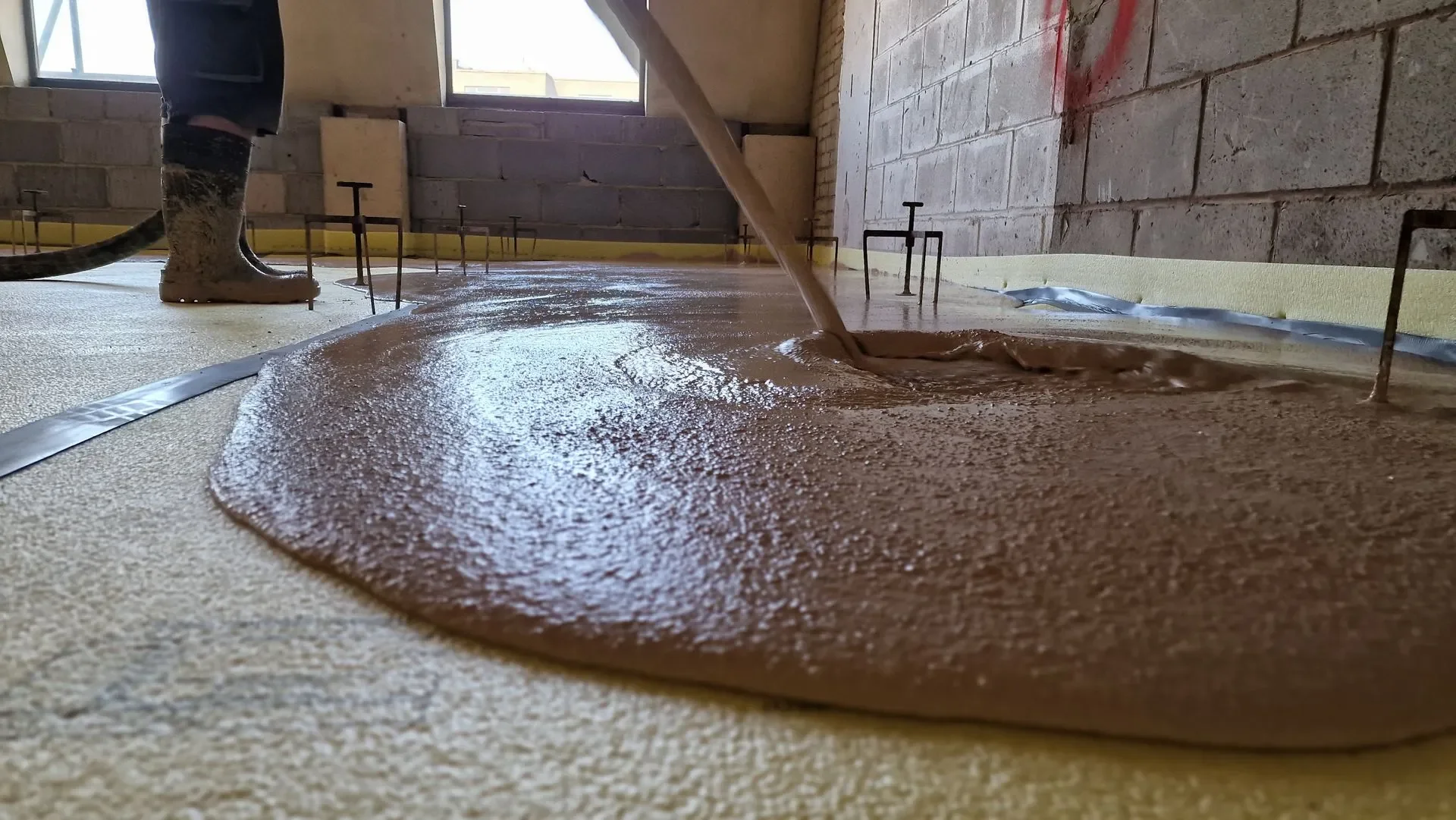
Liquid Screed
Liquid screed comes in many forms that have a variety of purposes depending on the application. Every screed we lay will have a full survey performed prior to any materials being laid to ensure everything is correct to our and the clients standards. After performing the site survey we will have a detailed discussion with the client and ascertain the correct screed for the project.
We always endeavour to turn up with plenty of time to get set up properly prior to the screed turning up. This gives us a chance to make sure that, if any problems do arise, we can sort them before the screed arrives on site. All levels will be set to an agreed upon datum and carried throughout the building using a laser level. During the laying of the screed, our friendly teams will do everything to ensure our workspace is kept clean and tidy, the screed is laid as perfectly as we can and everyone is happy with all works prior to leaving.
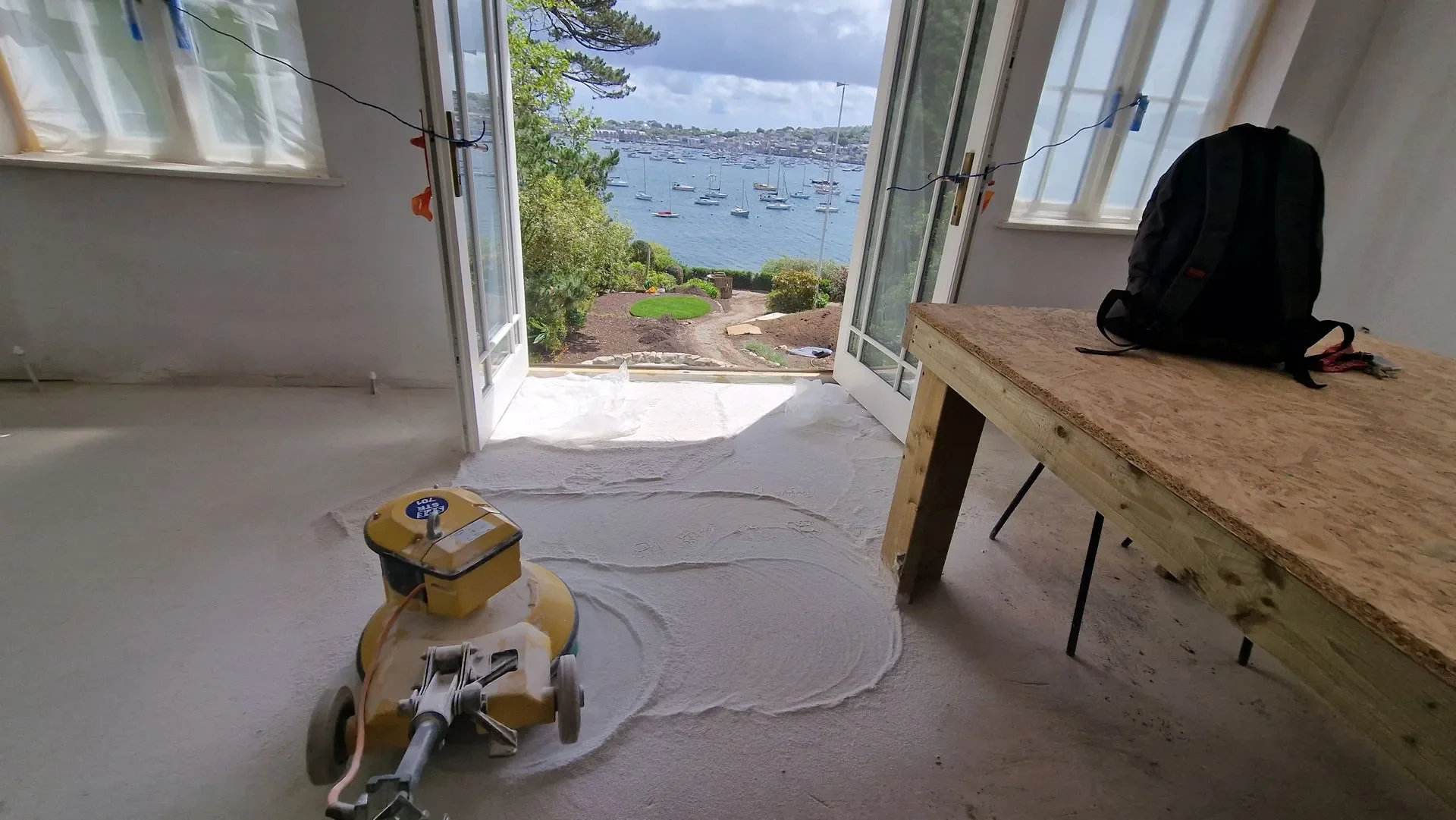
Laitence Removal
Before any finished surfaces can be bonded to the screeded floor, the laitance needs to be removed. Laintance is a fine layer that forms on top of the screed in the initial setting period. It is caused by the water evaporating from the screed. Whilst sometimes you can see this coming off when you walk on the screed, or even by brushing the screed, you will find that some places stick more than others.
We can come in with a specialist floor grinder and remove a minimum of 85% of the laitance so that it is suitable for whatever floor coverings you are having adhered to the floor. This will also help prompt the drying of the floor as the laitance can slightly prohibit the evaporation of residual moisture left in the floor.
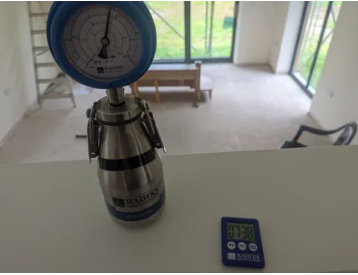
Moisture Test
Prior to finished surfaces being adhered to the floor, there should be a test performed on the floor to make sure that the floor is dry enough to be covered. Many people think that a surface level test is good enough but that doesn’t indicate if the screed is dry all the way through.
The moisture test that we perform requires us to take a small sample of the floor all the way through to determine how dry the floor really is. This can be done in an inconspicuous place and is extremely accurate. You will then get a report with photos attached of the reading that you can take to whomever is installing the finished floor to show them the floor is dry.